Tint by light
Lens tints: match the color to the light and the target
Bright sky, overcast, indoor fluorescent, dusk — against orange clay, a black bull, steel or game. The three tints that cover most shooters, and the polarized trap.
By Mike M. · Updated September 2026 · 6 pages in this section
#adLens & Lead earns from qualifying Amazon purchases. Prices are set by the retailer and change. A commission never decides a ranking. How we rate · Disclosure
Start here
Shooting glasses lens color guide: match the tint to the light and the target
Top pick: ESS ICE-3LS Kit MIL-PRF-32432A. Three lenses (clear, smoke, Hi-Def yellow), telescoping temples with bend-to-fit ear tabs, and MIL-PRF-32432A: the frameless ESS built to live under a helmet or a set of muffs.
#ad · Price set by Amazon · Disclosure for the link to ESS ICE-3LS Kit
Light times target
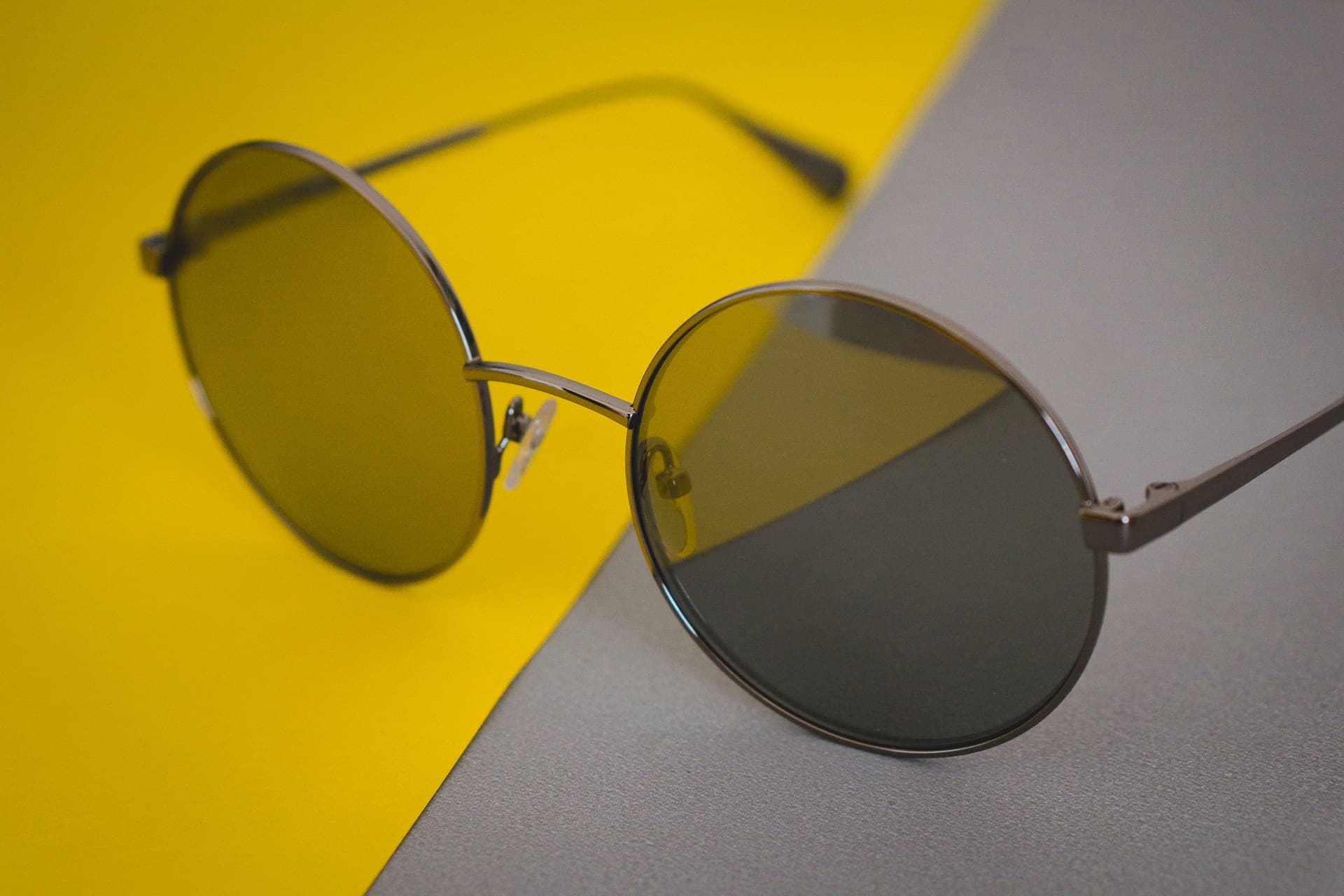
A lens tint does one physical thing: it removes part of the spectrum. Which part decides what it is for. Smoke and gray remove a little of everything, so a bright day gets dimmer without changing color. Yellow and amber remove blue, which is what makes overcast light look flat, so edges sharpen and a gray day reads brighter. Vermillion and rose remove green while passing orange and red, so an orange clay jumps off a treeline. Clear removes nothing and is the right lens whenever there is not enough light to spare. Cross those four with the four kinds of target — an orange clay, a black bull on white, steel, an animal in cover — and you have the matrix on the lens color guide.
The three tints that cover most shooters
Clear, smoke, and one contrast tint. Clear for indoors and dusk; smoke for a bright afternoon; yellow or amber for a rifle or pistol shooter in flat light, vermillion or rose for a clay shooter. That is why the three-lens kits ship exactly those combinations — ESS puts clear, smoke and Hi-Def yellow in the ICE-3LS and the Crosshair, Howard Leight puts clear, amber and vermillion in the Genesis — and why a single-tint frame is a compromise you notice the first time the light changes. The two most-asked-about tints get their own page on yellow vs clear, and the yellow pairs are ranked on best yellow shooting glasses.
Indoors: clear, then vermillion
An indoor bay is dim, even and artificial, with a black target on white paper. Clear is the default because it passes all the light there is; vermillion is the one tint with a stated indoor purpose — Howard Leight names it for "fluorescent/halogen indoor ranges" — and yellow helps on a genuinely dim range. Smoke, mirrors and polarized lenses belong in the truck. The reasoning is on best lens color for an indoor range.
Clays: the orange-target tints
An orange disc against trees or gray sky is a separation problem, not a brightness one. Vermillion and rose lift orange and cut green; amber holds contrast against a bright open sky; smoke darkens the bird and the background by the same amount. Radians sells the Clay Pro in vermillion and amber, Walker's the IKON Tanker in rose and amber, and SSP sells clay tints as replacement lenses for the Methow. The matrix by background and light is on best lens color for sporting clays.
The polarized trap
A polarizer is a glare filter, and it is a good one on water and pavement. It is also the one lens feature that can dim a red-dot sight, blank an LCD range display or chronograph at the wrong angle, and flatten the sheen on an orange clay. For the line, buy the non-polarized lens; for waterfowl with a bead, buy the polarizer as a second lens. Why is on should shooting glasses be polarized.
Tint has no rating
A lens color says nothing about whether the lens stops a fragment. A yellow lens from a rated kit is rated because the maker states the rating for the kit; a yellow lens from a bin is not. And a maker's claim can cover some tints and not others — Howard Leight states its military V0 pass for the clear and amber Genesis lenses and not the vermillion. Every kit page on this site quotes which lenses the claim names. The tiers are on ANSI Z87.1 vs MIL-PRF-32432; the kits themselves, ranked by rating and by what ships in the box, on best interchangeable-lens shooting glasses.
How the tint pages are written
The matrices are editorial: they follow from what each tint physically transmits and from the uses the makers name for their own tints, and they are labeled as such. We have not measured transmission curves and we do not print numbers we did not source. The picks on each page are frames that ship the tint the page is about, quoted from the maker's page, with the rating on the card.
The rankings
Ranked picks
The rankings
Best yellow shooting glasses
Five pairs that ship a yellow (or amber) lens on a rated frame — ESS Hi-Def Yellow kits, Walker's four-lens and youth pairs, and the Genesis amber — ranked by rating and box contents.
By Mike M. · Updated September 2026
Top pickESS ICE-3LS KitMIL-PRF-32432A· 5 ranked
Check price · Amazon#ad · Price set by Amazon · Disclosure for the link to ESS ICE-3LS Kit
Know-how
Guides
Guide
Lens color guide
The light × target matrix, what each tint physically does, the three tints that cover 90% of shooters, the polarized trap, and four kits ranked by the tints in the box.
By Mike M. · Updated September 2026
FeaturedESS ICE-3LS KitMIL-PRF-32432A
Check price · Amazon#ad · Price set by Amazon · Disclosure for the link to ESS ICE-3LS Kit
Guide
Yellow vs clear
Why the classic shooting lens is yellow, what it costs you in color and light, when clear wins, and the two kits with both lenses in the box.
By Mike M. · Updated September 2026
FeaturedESS ICE-3LS KitMIL-PRF-32432A
Check price · Amazon#ad · Price set by Amazon · Disclosure for the link to ESS ICE-3LS Kit
Guide
Best lens color for an indoor range
Clear as the default, vermillion as the named indoor tint, yellow for dim bays, and the tints to leave in the truck — plus the two frames that ship the right lenses.
By Mike M. · Updated September 2026
FeaturedHoward Leight Genesis Sharp-Shooter KitMilitary V0
Check price · Amazon#ad · Price set by Amazon · Disclosure for the link to Howard Leight Genesis Sharp-Shooter Kit
Guide
Best lens color for sporting clays
Vermillion, rose, amber and yellow by background and light; why smoke and polarized flatten the bird; and three clay frames that ship the right tint.
By Mike M. · Updated September 2026
FeaturedRadians Clay ProZ87.1
Check price · Amazon#ad · Price set by Amazon · Disclosure for the link to Radians Clay Pro
Guide
Should shooting glasses be polarized?
What a polarizer does, why it fights red dots and LCDs, why it does nothing for clays, the one case it earns its place, and two non-polarized kits for the line.
By Mike M. · Updated September 2026
FeaturedWiley X Saber AdvancedMIL-PRF-32432A
Check price · Amazon#ad · Price set by Amazon · Disclosure for the link to Wiley X Saber Advanced

Filed elsewhere, written for you
Also worth reading
Range
Best interchangeable-lens kits
Six swap-lens kits — what tints ship, how the lens locks, which frames document an Rx insert, and the ratings the makers state — ranked.
By Mike M. · Updated September 2026
Top pickESS ICE-3LS KitMIL-PRF-32432A· 6 ranked
Check price · Amazon#ad · Price set by Amazon · Disclosure for the link to ESS ICE-3LS Kit
Field & Shop
Best shooting glasses for sporting clays
Six clay pairs ranked for tint, sightline, temples and weight — with the makers' tint wording quoted and the honest rating tier on every card.
By Mike M. · Updated September 2026
Top pickSSP Eyewear Methow 3 XHD KitZ87.1+· 6 ranked
Check price · Amazon#ad · Price set by Amazon · Disclosure for the link to SSP Eyewear Methow 3 XHD Kit
Range
Best for an indoor range
Six pairs ranked for fluorescent light, close walls and next-lane brass: the tints that work indoors, why a ballistic tier matters more inside, and which frames close the brow.
By Mike M. · Updated September 2026
Top pickHoward Leight Genesis Sharp-Shooter KitMilitary V0· 6 ranked
Check price · Amazon#ad · Price set by Amazon · Disclosure for the link to Howard Leight Genesis Sharp-Shooter Kit