Lens Tints / The rankings
The best shooting glasses for low light and overcast conditions
A gray sky is not a dark sky. The lens that fixes a flat overcast morning is not the lens that fixes a dim indoor bay, and almost nobody selling eyewear tells you which one you are buying. Here is what the makers actually publish.
By Mike M.Updated Researched from maker specs & standards
#adLens & Lead earns from qualifying Amazon purchases. Prices are set by the retailer and change. A commission never decides a ranking. How we rate · Disclosure
Quick picks
The rankings at a glance
| # | Product | Best for | Rating | Score | Price |
|---|---|---|---|---|---|
| 1 | 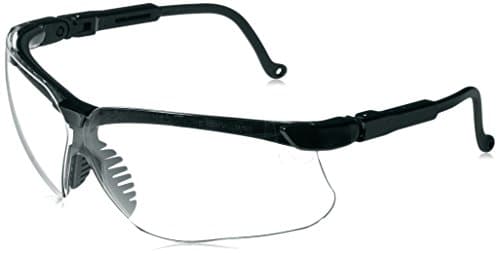 Howard Leight Genesis Sharp-Shooter Honeywell is one of the only makers that labels a lens by light level in writing: "Amber for low light/cloudy/foggy outdoor environments". Behind it sits a 9-base wraparound, a named Uvextreme anti-fog coating and a Military V0 claim on the clear and amber lenses. | Best for low light overall | Military V0 | 8.1 /10 | $11.77Amazon |
| 2 | 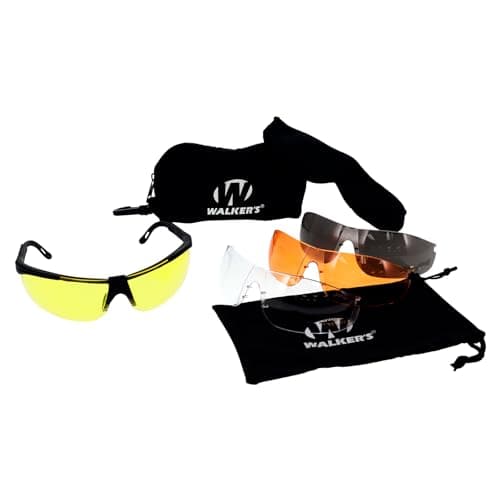 Walker's Sport Glasses (4-lens kit) Clear, yellow, amber and smoke in one case. Two of those four tints are low-light tints, which means a gray morning and a bright afternoon both get the right lens for less than the price of a single premium one. | Best cheap way to cover the whole light range | Z87.1+ | 7.1 /10 | $19.99Amazon |
| 3 | 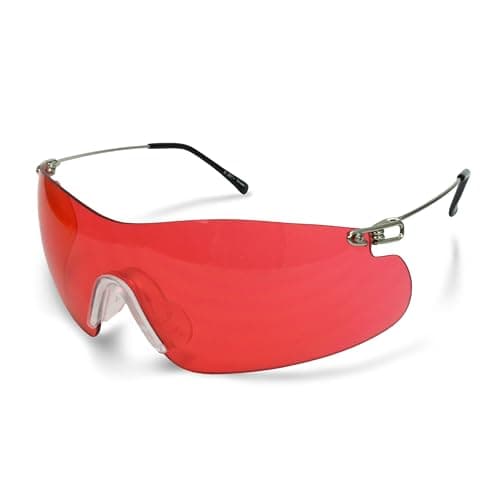 Radians Clay Pro Vermillion or amber on a frameless frame with thin metal temples — the classic answer to a white-sky trap morning. Radians' own page states no rating, so we hold it at the Z87.1 floor and say so out loud. | Best for flat gray clay light | Z87.1 | 5.9 /10 | $18.73Amazon |
| 4 | 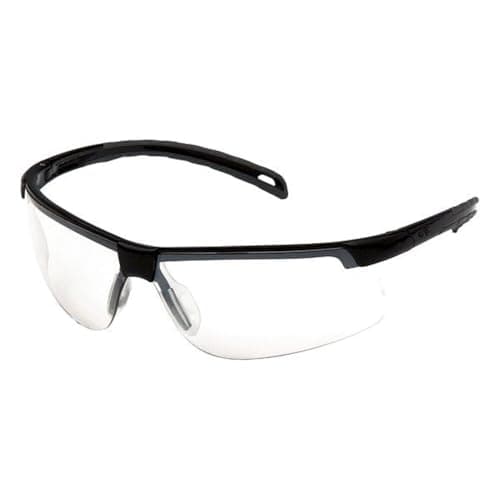 Pyramex Ever-Lite (SB8624D photochromic) The only pick here with a published transmission range: 85% at its clearest, 24% at its darkest. On a morning that starts overcast and ends in sun, that is one lens instead of two. | Best when the light will not stay put | Z87.1+ | 7.1 /10 | $31.52Amazon |
| 5 | 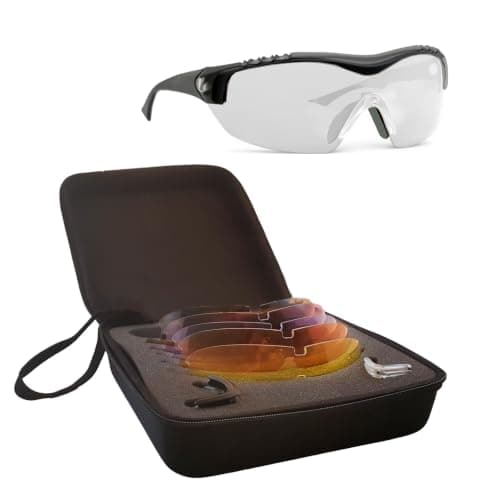 SSP Eyewear Methow 6 HD Kit Six HD lens colors in one box with SSP's NVR Fog treatment on all of them, from a maker whose sporting collection states Z87.1-2015 high impact. Priced like competition gear, because that is what it is. | Best if you want every low-light tint | Z87.1+ | 6.8 /10 | $321.23Amazon |
#ad · Prices come live from Amazon, last checked November 2, 2026. Ratings are quoted from the maker's page (or the retailer's, where labeled); scores are our editorial judgment from those pages. Photos are illustrative stock. Tap a row for the full write-up.
Low light is four different problems
"Low light" gets used for four situations that want four different answers, and the reason buyers end up with the wrong lens is that the product listing never says which one it is for.
Flat overcast. There is plenty of light — an overcast noon is bright enough to read by — but it arrives from everywhere at once, so nothing casts a shadow and edges go soft. A clay bird against a white sky, or a brown target against brown dirt, loses its outline. This is a contrast problem, not a brightness problem, and the fix is a tint that cuts part of the spectrum to let the rest stand out.
Dawn and dusk in the field. Real darkness is arriving, the sun is low and sitting in your eyes, and the light changes measurably over the half hour you are shooting. Here you want the lightest tint that still helps, or a lens that moves.
A dim indoor bay. Fluorescent or halogen fixtures overhead, a dark backstop, a lit target at 15 yards. You are not short of light at the firing line; you are short of light at the target, and the light you do have is spectrally horrible. Vermillion and rose exist for exactly this, and we give it its own page on best lens color for an indoor range.
Rain, fog and snow. Flat light plus water on the lens. Whatever tint you pick here, the coating matters more than the color — a fogged amber lens is worse than a clear one you can see through.
How we ranked these
This site ranks eyewear by the certification and the specs the maker publishes, never by how a pair felt on our face — no pair was. For a low-light page that rubric needs three extra filters on top of the standard published rubric:
| Criterion | What earns a point | Why it decides the ranking |
|---|---|---|
| A named low-light tint | The maker states the lens is for low light, cloud, fog or flat conditions — not just a color name | Amber, yellow, vermillion and rose all do different jobs; a color name alone tells you nothing |
| Published light transmission | An actual percentage, or a transmission range on a photochromic lens | It is the only objective measure of how dark a lens is, and four of five makers here never print it |
| A named anti-fog coating | A coating with a name and a described method, not the word "anti-fog" on its own | Low light comes with cold, damp and fog more often than not; a fogged lens beats every tint |
| The site floor: a published rating | ANSI Z87.1 at minimum, stated by the maker or quoted from a retailer and labeled as such | A tint is worthless on a pair that will not stop a fragment. The floor is non-negotiable |
Our criteria, applied to the documents linked in Sources at the foot of this page. The rating tier on every card comes from the maker's own wording wherever it exists.
That ranking order is also why a pair you might expect to see here is further down than you would guess. The Radians Clay Pro has exactly the right tints for flat light and the thinnest temples on this page, and it sits fourth from the top rather than first because Radians' own product page prints no rating at all — the Z87.1 wording comes from a retailer listing. We will tell you a pair is good and still rank it below one that documents itself better.
What each low-light tint actually does
Four tints get sold for flat light, and they are not interchangeable. The full matrix lives on the lens color guide; this is the low-light slice of it.
Yellow is the brightest-feeling of them. It cuts blue, which is the part of the spectrum that makes haze and flat overcast look milky, and the effect is a sharper-edged, higher-contrast picture that most people describe as "brighter" even though less light is reaching the eye. It is the tint for a gray morning and for a dim covered bay, and the honest comparison against no tint at all is on yellow vs clear. The pairs that offer it are ranked on best yellow shooting glasses.
Amber and bronze go further than yellow. They cut more blue and add a warm cast, so depth reads better and a dark target against dark ground separates. This is the lens Honeywell names for "low light/cloudy/foggy", and it is the one to reach for first if you are shooting outdoors under cloud. The trade is color accuracy: everything looks warmer than it is.
Vermillion and rose are the orange-target tints. They push orange and red forward, which is why clay shooters and indoor-range shooters buy them, and we cover them properly on vermillion and rose lenses. In genuinely failing light they are a weaker choice than amber, because they are built to make one color pop rather than to lift overall contrast.
Photochromic is not a tint, it is a mechanism: the lens darkens in direct UV and clears when the UV goes away. For low light that is exactly the right behavior — it sits near its clearest state when the sky is gray and darkens if the sun breaks through. The catch is that it needs direct UV, so it barely moves behind a windshield and does nothing in a covered bay. The whole technology is ranked on best photochromic shooting glasses.
The five, side by side
Every value is quoted from the source linked in that cell; a dash means the figure is not published in the documents we cite. Note how many dashes sit in the Weight and UV rows — this category publishes far less than buyers assume.
The number almost nobody publishes
Visible light transmission — the percentage of light a lens lets through — is the only objective way to compare two tints. A 90% lens is nearly clear. A 20% lens is a sunglass. Everything useful for flat overcast sits somewhere between about 50% and 90%, and a lens sold as a "low light" lens that turns out to be 35% will make a gray morning worse, not better.
Of the five pairs here, exactly one publishes the number. Pyramex states the Ever-Lite photochromic lens "transitions between 85% - 24%" light transmission, which tells you precisely what you are getting at both ends: near-clear on an overcast day, a proper sunglass in direct sun. Nobody else on this page prints a figure for any lens, which means the tint names are all you get and the only honest thing we can do is report that.
There is a second, quieter reason to care about transmission on a shooting range: the pair has to protect you, and a lens you cannot see the sights through gets pushed up onto your forehead. Eye protection that comes off is eye protection that does not work. The coverage and fit questions that decide whether a pair stays on your face are on best shooting glasses for ear muffs.
When the answer is a clear lens
At some point the light stops being flat and starts being absent, and every tint becomes a subtraction you cannot afford. Where that line falls depends on the shooter, but the test is simple: if you are struggling to see the target rather than to separate it from the background, you want the most light you can get, and that means a clear lens.
This is why three of the five picks here are kits rather than single pairs. The Genesis combo kit ships clear, amber and vermillion; the Walker's kit ships clear, yellow, amber and smoke; the Methow kit ships six HD colors. Buying the tint is one decision, and buying the ability to change your mind on the firing line at 7 a.m. is a different one. The kits are ranked on their own on best interchangeable-lens shooting glasses.
Three ways buyers get this wrong
Buying a polarized lens for flat light. Polarization filters glare off horizontal surfaces — water, wet road, a car hood. It does nothing for a gray sky, it reduces total transmission, and on some lenses it adds a cross-hatch artifact when you tilt your head. For low light it is the wrong tool, and the full argument is on should shooting glasses be polarized.
Ignoring fog. Cold, damp, flat-light mornings are the exact conditions that fog a lens, and a tint cannot help with that. Two picks here state a named coating and method — Honeywell's Uvextreme coating with a ventilation channel, and SSP's trademarked NVR Fog lenses. The Walker's kit states an "anti-fog design with airflow promotion" and no named coating; the Ever-Lite photochromic SKU states none at all, though Pyramex sells H2X on its siblings. If fog is your recurring problem, start with how to stop shooting glasses fogging before you buy anything.
Letting the tint outrank the rating. The reason this site organizes everything by certification is that a lens color is a preference and an impact rating is not. Three of these five pairs state only ANSI Z87.1 or an older edition of it; one states a Military V0 pass on two of its lenses. If you want the ballistic tier first and will accept whatever tint comes with it, the rankings to read are best ballistic glasses and best shooting glasses by rating.
If you buy one
In detail
The picks, in full
Rank 01
Best for low light overall
Howard Leight Genesis Sharp-Shooter
Honeywell is one of the only makers that labels a lens by light level in writing: "Amber for low light/cloudy/foggy outdoor environments". Behind it sits a 9-base wraparound, a named Uvextreme anti-fog coating and a Military V0 claim on the clear and amber lenses.
EvidenceResearched · maker specs & standards
How the 8.1 score breaks down
- Protection rating (30%)
- 8
- Optical clarity & tint options (20%)
- 8
- Fit & ear-pro compatibility (20%)
- 7
- Fog & scratch resistance (15%)
- 8
- Value (15%)
- 10
What the spec page supports
- Honeywell offers a vermillion lens for it — the indoor-range tint most budget pairs never offer
- Named anti-fog coating with a ventilation channel
- Adjustable temple length and lens angle; brow guard
- Military V0 wording on the clear and amber lenses
Where it falls short
- Check the lens before you buy: the SKU stocked on Amazon is the single clear lens. Honeywell's three-lens Combo Kit is a direct order
- The V0 claim covers clear and amber only; the vermillion lens carries the ANSI rating
- The stated ANSI edition is 2010, not 2020
- Weight not published
Skip this if…
…you want several tints in one box without ordering direct from Honeywell — the Walker's Sport kit hands you four lenses on one listing for similar money.
#ad · Price as of November 2, 2026 · Disclosure for the link to Howard Leight Genesis Sharp-Shooter
Rank 02
Best cheap way to cover the whole light range
Walker's Sport Glasses (4-lens kit)
Clear, yellow, amber and smoke in one case. Two of those four tints are low-light tints, which means a gray morning and a bright afternoon both get the right lens for less than the price of a single premium one.
EvidenceResearched · maker specs & standards
| Rating tier | Z87.1+. ANSI/ISEA Z87.1 impact-rated: a 500 g pointed weight dropped from 50 in and a 1/4 in steel ball at 150 ft/s. The minimum for any pair on this site. |
|---|---|
| Impact rating | "Exceeds ANSI Z87.1-2003 high-impact requirement" (older edition) |
| Lens material | High-grade polycarbonate |
| Lens system | "Clip & tension mounted design ensures quick & easy lens change" |
| Lenses included | Clear, Smoke Gray, Amber, Yellow; soft pouch, nylon sleeve, weatherproof case |
| Fit / size | Adjustable frame; ratcheting lens pitch; adjustable nose pad for broad bridge sizes |
| Coatings | "Anti-fog design with airflow promotion" (no named coating) |
| UV | UV protection (percentage not stated) |
How the 7.1 score breaks down
- Protection rating (30%)
- 6
- Optical clarity & tint options (20%)
- 8
- Fit & ear-pro compatibility (20%)
- 7
- Fog & scratch resistance (15%)
- 5
- Value (15%)
- 10
What the spec page supports
- Four tints in the box covers indoor, overcast, bright and orange-clay light
- Ratcheting lens pitch and an adjustable nose pad — real fit adjustment at a budget price
- Weatherproof case included
Where it falls short
- The maker cites the 2003 edition of Z87.1; no MIL-PRF wording
- Anti-fog is a vented design, not a named coating
- No Rx route; weight not stated
Skip this if…
…you want a ballistic (MIL-PRF) rating — this is a Z87.1 high-impact kit, and the Genesis Sharp-Shooter adds military V0 wording for a little more.
#ad · Price as of November 2, 2026 · Disclosure for the link to Walker's Sport Glasses (4-lens kit)
Rank 03
Best for flat gray clay light
Radians Clay Pro
Vermillion or amber on a frameless frame with thin metal temples — the classic answer to a white-sky trap morning. Radians' own page states no rating, so we hold it at the Z87.1 floor and say so out loud.
EvidenceResearched · maker specs & standards
| Rating tier | Z87.1. The maker states ANSI Z87.1 without the '+' high-impact mark. Basic impact only; we treat it as the floor and say so. |
|---|---|
| Impact rating | "Most Radians Clay Pro glasses meet ANSI Z87.1 standards" (as listed by the retailer; Radians' page states no rating) |
| Lens system | Frameless lens, "non-obstructive view"; style codes CP5740CS, CP5710CS, CP5780CS |
| Lenses included | Amber or Vermillion (one lens per pair) |
| Temples | "Thin metal temples"; adjustable nose piece |
How the 5.9 score breaks down
- Protection rating (30%)
- 4
- Optical clarity & tint options (20%)
- 7
- Fit & ear-pro compatibility (20%)
- 8
- Fog & scratch resistance (15%)
- 3
- Value (15%)
- 8
What the spec page supports
- Thin metal temples slide under muff cups with almost no gap
- Vermillion and amber — the two clay tints shooters ask for
- Frameless lower edge keeps the gun mount unobstructed
Where it falls short
- Rating wording comes from a retailer, not from Radians; no '+' high-impact mark is claimed
- One lens per pair; no clear lens option listed
- Coatings, UV and lens material not stated
Skip this if…
…you want a rating you can read on the maker's own page — the Pyramex Intruder and the Genesis kit both state Z87.1+ high impact outright.
#ad · Price as of November 2, 2026 · Disclosure for the link to Radians Clay Pro
Rank 04
Best when the light will not stay put
Pyramex Ever-Lite (SB8624D photochromic)
The only pick here with a published transmission range: 85% at its clearest, 24% at its darkest. On a morning that starts overcast and ends in sun, that is one lens instead of two.
EvidenceResearched · maker specs & standards
| Rating tier | Z87.1+. ANSI/ISEA Z87.1 impact-rated: a 500 g pointed weight dropped from 50 in and a 1/4 in steel ball at 150 ft/s. The minimum for any pair on this site. |
|---|---|
| Impact rating | "ANSI/ISEA Z87.1-2020 + High Impact"; CAN/CSA Z94.3-2020 |
| Lens material | Scratch-resistant polycarbonate; photochromic range "Transitions between 85% - 24%" light transmission |
| Lens system | "Transition lens option-SB8624D photochromic lens transitions from clear to dark after exposure to direct UV light. Lens change from dark to clear after removal from UV light." |
| Temples | "Slim co-injected temples" with a "soft nosepiece for snug fit" |
| Weight | "Lightweight spectacle – 22 gm" |
| Coatings | H2X and H2MAX anti-fog are offered on other Ever-Lite SKUs; the photochromic SB8624D is listed with a scratch-resistant lens and no named anti-fog |
| UV | 99% UVA/B/C protection |
How the 7.1 score breaks down
- Protection rating (30%)
- 7
- Optical clarity & tint options (20%)
- 8
- Fit & ear-pro compatibility (20%)
- 7
- Fog & scratch resistance (15%)
- 4
- Value (15%)
- 9
What the spec page supports
- The maker publishes both ends of the transition — 85% clear, 24% dark — instead of saying "adjusts to the light"
- 22 grams: the lightest pair in this batch, and the one you forget you are wearing
- Z87.1-2020 with the high-impact plus, plus the Canadian standard
- Slim co-injected temples sit under a muff cup without levering the seal
Where it falls short
- No named anti-fog coating on the photochromic SKU, though Pyramex sells H2X on its siblings
- No MIL-PRF wording anywhere on the page — this is a Z87+ pair, not a ballistic one
- Photochromic lenses barely darken behind a windshield, and stock on this SKU moves
Skip this if…
…you shoot behind glass or in a covered indoor bay — a photochromic lens needs direct UV to darken, and indoors it simply stays clear, which is fine but makes the feature pointless.
#ad · Price as of November 2, 2026 · Disclosure for the link to Pyramex Ever-Lite (SB8624D photochromic)
Rank 05
Best if you want every low-light tint
SSP Eyewear Methow 6 HD Kit
Six HD lens colors in one box with SSP's NVR Fog treatment on all of them, from a maker whose sporting collection states Z87.1-2015 high impact. Priced like competition gear, because that is what it is.
EvidenceResearched · maker specs & standards
| Rating tier | Z87.1+. ANSI/ISEA Z87.1 impact-rated: a 500 g pointed weight dropped from 50 in and a 1/4 in steel ball at 150 ft/s. The minimum for any pair on this site. |
|---|---|
| Impact rating | "All lenses meet ANSI/ISEA Z87.1-2015 specifications for high impact protection" (SSP sporting collection statement) |
| Lenses included | SSP sells the Methow in several kit sizes; the kit stocked new on Amazon is the Methow 6 HD — frame plus six interchangeable HD lens colors, black frame |
| Rx insert | "They are RX-able" — Methow Rx shotgun kits offered |
| Coatings | "Trademarked NVR Fog a-EYE lenses" |
How the 6.8 score breaks down
- Protection rating (30%)
- 6
- Optical clarity & tint options (20%)
- 9
- Fit & ear-pro compatibility (20%)
- 7
- Fog & scratch resistance (15%)
- 8
- Value (15%)
- 4
What the spec page supports
- Purpose-built clay kit with an Rx route from the same maker
- Named anti-fog treatment on every lens
- Six interchangeable HD lens colors in one box — more tints than any other kit on the site
Where it falls short
- The Z87.1-2015 statement is collection-wide, not printed on the kit page itself
- No MIL-PRF wording
- Priced well above every other kit on the site
Skip this if…
…you shoot a few rounds of clays a season — a Walker's Sport kit covers four tints for a fraction of the price.
#ad · Price as of November 2, 2026 · Disclosure for the link to SSP Eyewear Methow 6 HD Kit
Indoor dim and outdoor dim are not the same buy
If your low light is a covered bay under fluorescent tubes, stop reading this page and read best lens color for an indoor range. Indoor light is a spectral problem — the fixtures emit in spikes, not smoothly — which is why vermillion and clear both beat amber there, and why a photochromic lens is pointless indoors: without direct UV it simply stays clear. The frames built for that environment are ranked on best shooting glasses for an indoor range.
Dawn, dusk and the hunting case
In the field the low-light window is also the legal-light window, and you are trading contrast against every photon you can keep. Amber early, clear when it gets serious, and a frame that will survive being dragged through brush. The field-specific picks are on best hunting shooting glasses and, for walked-up birds, upland hunting.
If you shoot long strings in flat light
Competition in overcast weather means hours in the same pair, and weight and fog become the thing you notice rather than the tint. The frames that publish a weight — and the ones whose anti-fog is infused rather than wiped on — are ranked on best lightweight shooting glasses.
How Lens & Lead rates eyewear
How these picks were chosen
Every pair here is picked from the certification its maker publishes and repeats in its own wording ("meets", "certified", "tested to", "APEL"), the lens system and the tints in the box, whether the temples are described for ear muffs, and whether an Rx route exists — then scored on a public rubric that weights protection first. Every figure links to the page it came from, so you can confirm the protection before you buy. The standards themselves are explained on ANSI Z87.1 vs MIL-PRF-32432.
Scores are editorial judgments from that documented research, and the rating, the lens system and the fit are what move a pick. The rubric and its weights are published.
Corrections & updates
- First edition. Tint-by-light-level wording quoted from Honeywell's Genesis Sharp-Shooter page, re-read 2026-10-15; the 85%-24% transmission range from Pyramex's retailer listing for the SB8624D. The Radians Clay Pro is ranked below pairs with weaker tints because Radians publishes no rating on its own page.
Questions
Frequently asked
What lens color is best for low light or overcast shooting?
Amber or bronze for outdoor low light and cloud — Honeywell labels its amber lens exactly that way — yellow for flat haze and dim bays, vermillion for orange targets and indoor fluorescent light, and a clear lens once the light is genuinely failing rather than merely flat.
Are yellow lenses good in the dark?
No. A yellow lens raises apparent contrast by cutting blue light, which helps in flat or hazy conditions, but it still removes light overall. When you are short of light rather than short of contrast, a clear lens wins.
Do photochromic shooting glasses work in low light?
Yes, in the sense that they sit near their clearest state when there is little UV — Pyramex publishes 85% transmission at the clear end of the Ever-Lite range. The limitation is the reverse case: they need direct UV to darken, so they stay clear behind a windshield and in a covered bay.
Can I just wear clear shooting glasses for everything?
You can, and it is a defensible choice — clear is the only lens that never costs you light, and every kit here ships one. What you give up is the contrast lift that makes a clay against a white sky or a dark target against dark ground easier to pick out.
Does a low-light lens need an anti-fog coating?
More than a bright-light lens does, because flat light usually arrives with cold and damp. Look for a coating with a name and a stated method — Honeywell's Uvextreme with a ventilation channel, or SSP's NVR Fog treatment — rather than the bare word "anti-fog".
Keep reading
Related on Lens & Lead
Receipts
Sources
- Howard Leight Shooting Sports — Genesis Sharp-Shooter Combo Kit page (ANSI Z87.1-2010 high impact, CSA Z94.3, "Military V0" on clear/amber, Uvextreme, 3 lenses) (checked 2026-09-21)
- Howard Leight Shooting Sports — Genesis Sharp-Shooter Combo Kit page, re-read for the review ("Clear for most indoor/outdoor uses; Amber for low light/cloudy/foggy outdoor environments; Vermillion for indoor fluorescent/halogen lit ranges"; "Clear and Amber lenses meet Military V0 ballistic impact test requirements (7X higher than ANSI)"; "Meets ANSI Z87.1-2010 (High Impact)" and CSA Z94.3; "Uvextreme anti-fog coating and ventilation channel expertly controls fog and moisture"; "soft, elastomer browguard diffuses impact while providing comfort"; "Customize your fit with the flexible nose piece, temple length and lens inclination"; "9-base wraparound uni-lens provides outstanding peripheral vision and protective side coverage"; 99.9% UV protection) (checked 2026-10-15)
- Walker's — Sport Glasses With Interchangeable Lens page (4-lens kit, "exceeds ANSI Z87.1-2003 high-impact requirement") (checked 2026-09-21)
- Radians — Clay Pro Shooting Glass page (frameless, metal temples, style codes) (checked 2026-09-21)
- Full Source — Radians Clay Pro listing, stock re-check (Vermillion RAD-CP5780CS and Amber RAD-CP5740CS both listed and active; "Most Radians Clay Pro glasses meet ANSI Z87.1 standards"; "Non-obstructive view with thin metal temples and a frameless lens design") (checked 2026-10-01)
- Pyramex — Ever-Lite half-frame eyewear page (ANSI/ISEA Z87.1-2020 + High Impact; CAN/CSA Z94.3-2020; "Transition lens option-SB8624D photochromic lens transitions from clear to dark after exposure to direct UV light"; "Lightweight spectacle – 22 gm"; slim co-injected temples; H2X / H2MAX options) (checked 2026-09-26)
- Full Source — Pyramex SB8624D Ever-Lite light-adjusting photochromic listing ("Transitions between 85% - 24%", 99% UVA/B/C, scratch-resistant polycarbonate, 22 grams, $41.99 per pair) (checked 2026-09-26)
- SSP Eyewear — Methow shooting eyewear collection (3 XHD kit, NVR Fog a-EYE lenses, RX-able) (checked 2026-09-21)
- SSP Eyewear — Sportsman collection page ("All lenses meet ANSI/ISEA Z87.1-2015 specifications for high impact protection") (checked 2026-09-21)
- ISEA — ISEA publishes ANSI/ISEA Z87.1-2020 eye and face protection standard update (anti-fog criteria, relaxed optics, marking) (checked 2026-09-21)
Ratings, lens systems, fit notes and coatings come from the maker's own product pages and manuals (linked on every product), with the published safety standards behind them, and a labeled retailer or press page where the maker's own page was unavailable. Every buy button opens today's live Amazon price. Read the full method.