Lens Tints / Guide
The best lens color for an indoor range: clear, then vermillion, then yellow — and nothing darker
Indoor light is even, artificial and not very bright, and the target is a black shape on white paper. The lens that passes the most light and lifts the black wins. That is a short list.
By Mike M.Updated Spec-page researched, not worn by us
#adLens & Lead earns from qualifying Amazon purchases. Prices are set by the retailer and change. A commission never decides a ranking. How we rate · Disclosure
What indoor light is
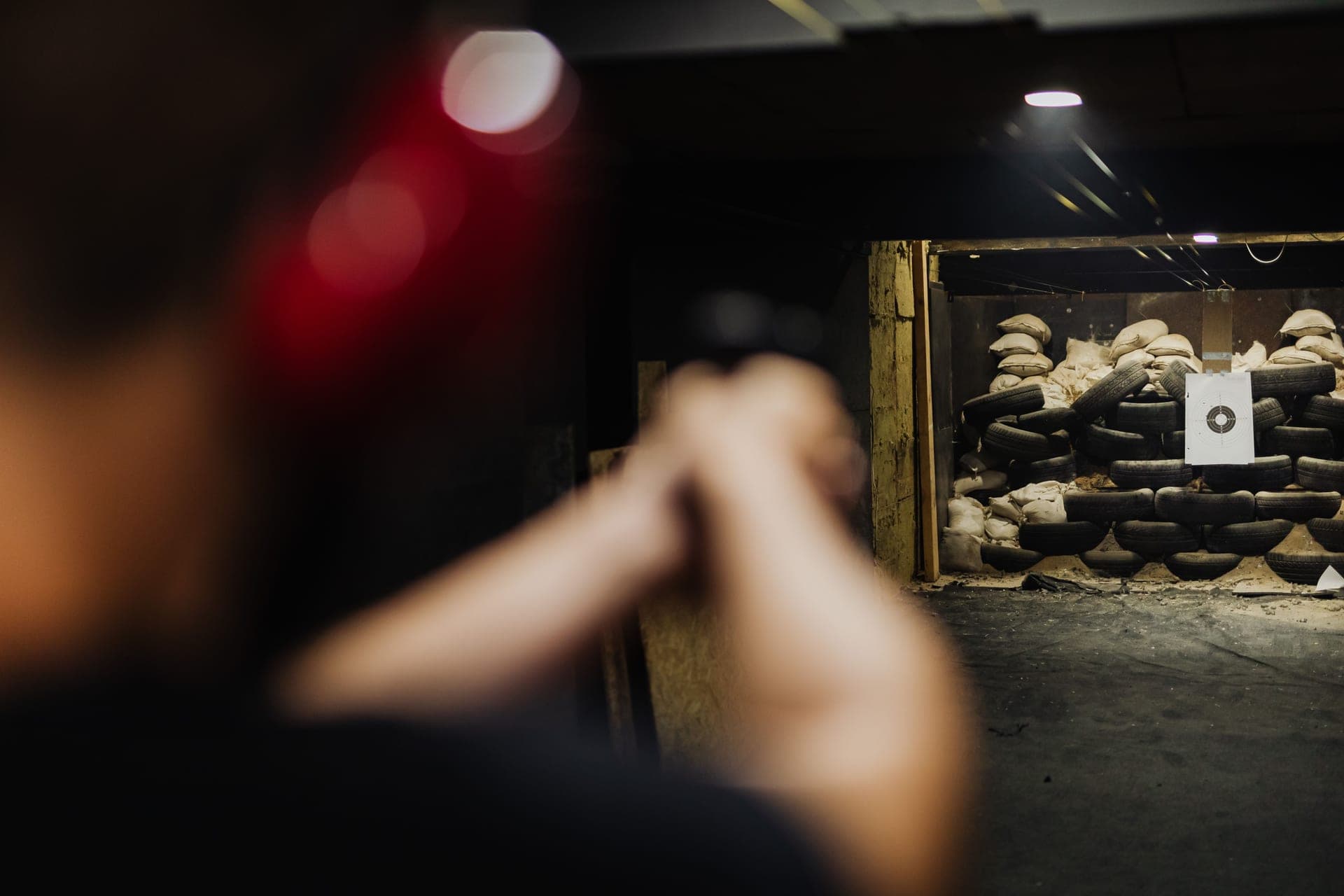
Fluorescent tubes or LED panels, spaced along the ceiling, lighting a lane that runs twenty-five yards to a backstop. The light is even and it is dim compared with a cloudy day outside — your pupils are open. The target is high contrast already: a black bull or a gray silhouette on white. There is no glare to cut and no orange to lift. The job of the lens is to get out of the way, and if it does anything at all, to make black blacker.
Clear: the default
A clear polycarbonate lens transmits nearly all visible light, which is the whole argument. Every kit ships one, every maker calls it the indoor lens (Howard Leight: "Clear (indoor/outdoor)"), and the Crossbow 2LS puts one in the box beside the smoke lens for exactly this reason. If you buy one lens for an indoor range, it is clear.
Vermillion: the named indoor tint
Vermillion is a pink-red lens that passes red and orange and cuts green. Under fluorescent light — which is heavy in green — it warms the scene and deepens the black of a bull against white. Howard Leight is the maker that says so on the page: the Genesis kit's vermillion lens is for "fluorescent/halogen indoor ranges". It is also the clay tint, which makes the Genesis the kit for a shooter who splits time between an indoor bay and a trap field. The clay side is on best lens color for sporting clays.
Yellow: for a dim bay
On an older range with tired tubes, yellow does what it does outdoors on a gray day: blocks the blue, sharpens the edges, makes the bay feel brighter. It costs a little total light and casts everything yellow, so it is the third choice rather than the first. Why yellow works is on yellow vs clear.
What to leave in the truck
- Smoke and gray. They cut light evenly; indoors that is light you needed.
- Mirrors. A mirror coat is a smoke lens with a reflective layer; same problem.
- Polarized. No glare to cut, and a polarizer can blank the LCD on a range display or a chronograph. See should shooting glasses be polarized.
- Amber, mostly. Amber is a deeper yellow; on a dim bay it takes more light than it gives back.
Picks
Our picks for this
The right lens in the box
 Stock photo
Best value 3-lens kit
Howard Leight Genesis Sharp-Shooter Kit
Military V08.1/10Clear plus the named vermillion indoor lens, with a brow guard and Uvextreme anti-fog.
Check price · Amazon#ad · Price set by Amazon · Disclosure for the link to Howard Leight Genesis Sharp-Shooter Kit
- Stock photo
Best APEL-listed kit
ESS Crossbow 2LS Kit
APEL8.6/10Clear lens in the box on an APEL-listed frame with a named anti-fog coating for a warm bay.
Check price · Amazon#ad · Price set by Amazon · Disclosure for the link to ESS Crossbow 2LS Kit
How Lens & Lead rates eyewear
Pairs we claim to have worn or tested: 0
Plenty of sites say they shot every pair on the list. We didn't, and we say so. What we do instead: read the certification the maker actually publishes and repeat its wording ("meets", "certified", "tested to", "APEL"), check the lens system and the tints in the box, note whether the temples are described for ear muffs and whether an Rx route exists, and score every pick on a public rubric that weights protection first. Every figure links to where it came from; where the maker's page would not load we cite the retailer and say so. The standards themselves are explained on ANSI Z87.1 vs MIL-PRF-32432.
Scores are editorial judgments from that documented research, not test results. Commissions never set a score or decide a pick. The rubric and its weights are published.
Questions
Frequently asked
What color shooting glasses for an indoor range?
Clear. Vermillion if you want a contrast tint — Howard Leight names it for fluorescent and halogen ranges. Yellow on a dim bay. Nothing darker.
Are yellow shooting glasses good indoors?
On a dim range, yes: yellow sharpens contrast. On a well-lit range clear passes more light and is the better default.
Can I wear tinted safety glasses at an indoor range?
You can, but smoke and mirror tints cost light you need indoors. Clear or vermillion are the tints with a case.
Keep reading
Related on Lens & Lead
Receipts
Sources
- Howard Leight Shooting Sports — Genesis Sharp-Shooter Combo Kit page (ANSI Z87.1-2010 high impact, CSA Z94.3, "Military V0" on clear/amber, Uvextreme, 3 lenses) (checked 2026-09-21)
- ESS EyePro — Crossbow 2LS Kit page (ANSI Z87+ 2020, ClearZone FlowCoat, U-Rx / Vice inserts, Tri-Tech Fit) (checked 2026-09-21)
- ESS EyePro — Crossbow Black 2x w/Clear & Smoke Gray APEL page (ANSI Z87.1+ 2015, MIL-PRF-32432A, APEL) (checked 2026-09-21)
- ESS EyePro — ICE-3LS Kit page (ANSI Z87.1, MIL-PRF-32432A, kit contents, Rx inserts, temples) (checked 2026-09-21)
We don't own or wear-test these glasses and we don't pretend to. Ratings, lens systems, fit notes and coatings come from the maker's own product pages (linked on every product) or, where the maker's page would not load, from a retailer or press page we label as such. Where a figure isn't published we say so. Prices are set by Amazon and change often, so we don't print them. Read the full method.