Fit & Youth / Guide
How to clean safety glasses without scratching the lens
Every scratch-resistant and anti-fog claim on a safety lens is a surface treatment, and the way most people clean their glasses is the fastest way to remove it. The correct method takes thirty seconds.
By Mike M.Updated Researched from maker specs & standards
#adLens & Lead earns from qualifying Amazon purchases. Prices are set by the retailer and change. A commission never decides a ranking. How we rate · Disclosure
Why cleaning is the main cause of scratches
Safety lenses are polycarbonate because it is extraordinarily impact tough, but polycarbonate is soft at the surface. Almost everything that lands on it in a shop or at a range — concrete dust, sand, metal swarf, glass, grinding grit — is harder than it is. On its own that dust does nothing. Pressed against the lens by a cloth and dragged in a circle, it behaves like a very fine lapping compound.
So the usual sequence — glasses come off, lens looks dusty, lens gets wiped on a shirt tail — is not a cleaning process, it is an abrasion process. It is also the reason two people can buy the same frame and one of them is looking through a hazy lens in six weeks while the other is fine after a year. The frame is not the variable.
The second thing cleaning destroys is the coating, and this is the expensive one. Everything a maker charges extra for on a lens surface is a thin layer: Edge's Vapor Shield anti-fog, Pyramex's H2MAX and H2X, NoCry's anti-fog and anti-scratch treatments, Bollé's Platinum, ESS's ClearZone FlowCoat. The wrong chemical takes that layer off and leaves you with a bare, soft lens that now fogs and marks easily.
The method, step by step
1. Rinse before you touch it. Running water, as cool or lukewarm as comes out of the tap. The whole point is to float the abrasive particles off the surface before anything contacts them. If you are away from a tap, a water bottle works; so does a lens-cleaning spray in enough quantity to actually run off the lens rather than smear.
2. Add soap only if it is oily. One drop of mild dish soap, worked gently with your fingertips. This is the step that matters for mechanics, for anyone handling solvents, and for sunscreen and insect repellent in summer — all of which smear rather than rinse. Avoid anything with grit, citrus solvent or hand-cleaner pumice in it.
3. Rinse again, thoroughly. Soap residue dries as a film and makes a lens look worse than before.
4. Dry with a clean microfiber cloth, lightly. Light pressure, straight lines rather than hard circles. The cloth has to be clean: a microfiber that has been in a pocket with grit is the same hazard as the shirt tail. Most kits ship one for exactly this purpose — ESS includes a No-Fog cloth with its kits, Revision ships an anti-fog cloth, and Global Vision boxes a microfiber pouch.
5. Let a sealed goggle dry open. Foam and vinyl seals hold water. Standing a goggle open to air for a few minutes prevents the damp-foam smell and the fog that comes with it.
What not to use
Ammonia-based household glass cleaner. Formulated for glass windows, not coated polycarbonate. It is the most common coating-stripper in any workshop.
Solvents. Acetone, brake cleaner, lacquer thinner, carburetor cleaner. These attack polycarbonate itself, not merely the coating, and can craze a lens permanently. In a bay where these are within arm's reach, this is a real risk — which is also why the Pyramex Cappture Pro's published claim of chemical resistance on its H2MAX lens is worth something.
Alcohol wipes and sanitiser gel. Convenient and bad for coatings. Fine on a frame, poor on a treated lens.
Paper towel, tissue and clothing. Wood-fibre paper is abrasive on a soft lens surface, and clothing carries whatever you have been working in.
Toothpaste, polishing compound or any "scratch remover". These work by removing material. On a safety lens that means removing the hard coat and thinning the lens, and the published guidance for workplace eyewear is to discard scratched or pitted lenses rather than attempt a repair.
Cleaning an anti-fog lens
Anti-fog treatments are the most fragile thing on a lens and the most commonly destroyed by cleaning, so they deserve their own rule: the gentler of two methods always wins. Rinse, do not scrub. Do not use a product unless the maker says you can. And do not stack an aftermarket anti-fog spray on top of a factory treatment without checking — the two can interact and leave a smeared surface that is worse than either alone.
Worth knowing which kind of treatment you own, because it changes how careful you need to be. Edge states that its Vapor Shield is "infused into the lenses during manufacturing" and therefore outlasts topical coatings, which is the most durable construction on this site. Pyramex's H2MAX is described as adding abrasion and chemical resistance alongside clarity, which is the next best position to be in. A lens whose listing says only "anti-fog" with no named technology is likely a surface film, and you should assume cleaning will shorten its life. The full comparison is on best anti-fog safety glasses, and if your pair is fogging now rather than later, the fixes are on how to stop glasses fogging.
Storage does more than cleaning
The cheapest improvement available in this entire category costs nothing: stop putting your glasses down lens first. Ohio State University Extension's eye protection guidance for trainers and supervisors says to store clean eyewear in a closed, dustproof case, and the reason is simple — a lens that never touches a bench never picks up the grit that the next wipe grinds into it.
Three habits that between them outlast any coating upgrade. Set glasses down on their temples, not on the lens. Use the pouch or case the kit came with rather than a tool bag — ESS ships a zippered case with the Crosshair kit, Walker's includes a weatherproof case with the four-lens kit, Revision supplies a pouch and case. And keep them out of a hot vehicle dashboard in summer, where heat and sun do the frame no favors.
Lenses built to survive being cleaned
Our picks for this
Three frames whose coatings are described, not just claimed
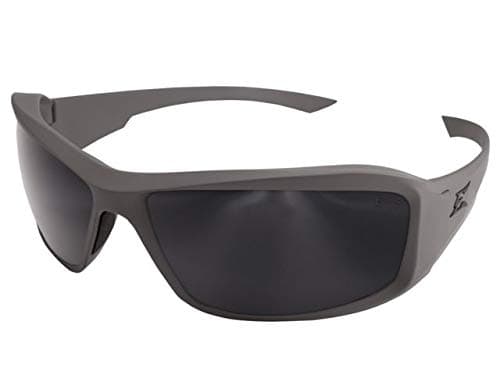
Best ballistic frame with polarized and photochromic lenses
Edge Hamel
MIL-PRF-32432A8.7/10Vapor Shield anti-fog infused into the lens during manufacturing, plus a 3x anti-scratch coating per the retailer — the most durable surface story on this site, on a frame stating ANSI Z87.1+ and MIL-PRF 32432-A.
$49.99Amazon#ad · Price as of November 2, 2026 · Disclosure for the link to Edge Hamel
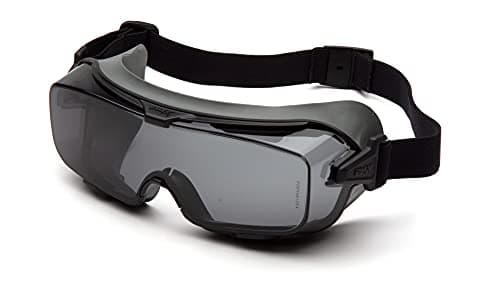
Best anti-fog OTG
Pyramex Cappture Pro
Z87.1+7.1/10H2MAX, which Pyramex states adds abrasion and chemical resistance — the claim that matters if your lens lives near solvents. ANSI/ISEA Z87.1-2020 + High Impact on an over-the-spectacle frame.
$17.99Amazon#ad · Price as of November 2, 2026 · Disclosure for the link to Pyramex Cappture Pro
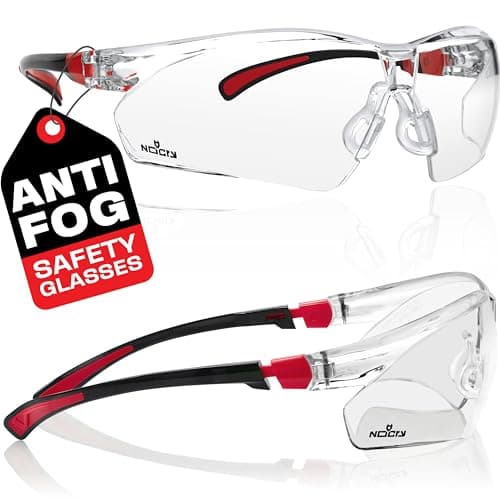
Best adjustable shop glasses
NoCry EyeArmor+
Z87.16.5/10Anti-fog and anti-scratch on the same lens with published multiples behind both claims, adjustable temples, and a limited lifetime warranty if the coating does not hold up.
$13.99Amazon#ad · Price as of November 2, 2026 · Disclosure for the link to NoCry EyeArmor+
When cleaning is no longer the answer
There is a point where a lens is not dirty, it is damaged, and continuing to clean it is both futile and a little bit dangerous. Scratches and pits are stress concentrations — they give an impact a place to start — and they scatter light, which is why a marked lens turns every bright source into a star and makes a dark target harder to pick out of its background.
The published guidance is unambiguous: discard pitted or scratched eyewear, and replace cracked, pitted or damaged goggles or spectacles. Our own thresholds, and the other reasons to retire a pair, are on when to replace shooting glasses. If you are replacing a lens rather than a pair, an interchangeable-lens frame makes that cheap enough to actually do — the field is on best interchangeable-lens shooting glasses, and the hardest-coated frames are ranked on best scratch-resistant safety glasses.
How Lens & Lead rates eyewear
How these picks were chosen
Every pair here is picked from the certification its maker publishes and repeats in its own wording ("meets", "certified", "tested to", "APEL"), the lens system and the tints in the box, whether the temples are described for ear muffs, and whether an Rx route exists — then scored on a public rubric that weights protection first. Every figure links to the page it came from, so you can confirm the protection before you buy. The standards themselves are explained on ANSI Z87.1 vs MIL-PRF-32432.
Scores are editorial judgments from that documented research, and the rating, the lens system and the fit are what move a pick. The rubric and its weights are published.
Questions
Frequently asked
How do you clean safety glasses without scratching them?
Rinse with clean water first so the grit floats off, add a drop of mild dish soap if the lens is oily, rinse again, then dry with a clean microfiber cloth using light pressure. The scratching comes from dry-wiping dust, not from the water.
Can you use Windex or glass cleaner on safety glasses?
Avoid it. Ammonia-based glass cleaners are formulated for glass, not for coated polycarbonate, and they are the most common cause of a stripped anti-fog or hard coat. Water and mild dish soap are safer and work better.
What is the best thing to clean safety glasses with?
Running water, a drop of mild dish soap when needed, and a clean microfiber cloth. Keep the cloth clean — one that has been loose in a pocket is as abrasive as a shirt tail.
Can you remove scratches from safety glasses?
No. Polishes and so-called scratch removers work by removing material, which strips the hard coat and thins the lens. The published workplace guidance is to discard scratched or pitted eyewear and replace the lens or the pair.
Keep reading
Related on Lens & Lead
Receipts
Sources
- Ohio State University Extension, Agricultural Safety and Health Program — Ohioline AEX-892235, Personal Eye Protection for Trainers and Supervisors ("Discard pitted or scratched eyewear"; "Replace cracked, pitted, or damaged goggles or spectacles"; "Store clean eye wear in a closed, dustproof case") (checked 2026-10-08)
- Edge Eyewear — Hamel tactical eyewear page ("MIL-PRF 32432-A"; "ANSI Z87.1+"; EN166; UKCA; CSA Z94.3; Polarized Smoke, Photochromic, G-15, Clear and Tigers Eye Vapor Shield lens options; "block 99.9% of UVA, UVB and UVC rays"; thin temples that integrate with "helmets, hats or hearing protection"; 66 mm lens width, 140 mm temple; $71.88) (checked 2026-09-26)
- Safety Glasses USA — Edge Hamel listing ("ANSI Z87.1+2010, Military Ballistic MCEPS GL-PD 10-12, and EN166 F CE standards"; "3x Anti-Scratch lens coating"; Vapor Shield anti-fog) (checked 2026-09-26)
- Pyramex — Cappture Pro over-the-spectacle page (ANSI/ISEA Z87.1-2020+, H2MAX, 99% UV) (checked 2026-09-21)
- NoCry — EyeArmor+ Adjustable Anti-Fog page (ANSI/ISEA Z87.1-2020, EN 166, adjustable temples, anti-fog/anti-scratch, UV380) (checked 2026-09-21)
- ESS EyePro — Crosshair 3LS Kit page (ANSI Z87.1-2015, MIL-PRF-32432, kit contents, URX insert) (checked 2026-09-21)
- Revision Military — StingerHawk Eyewear APEL U.S. Military Kit page (MIL-PRF-32432A clause 3.8.4.1, ANSI Z87.1-2020 clause 7.1, V50, EN 166, sizes, OcuMax) (checked 2026-09-21)
- Walker's — Sport Glasses With Interchangeable Lens page (4-lens kit, "exceeds ANSI Z87.1-2003 high-impact requirement") (checked 2026-09-21)
- Pyramex — Intruder frameless eyewear page (ANSI/ISEA Z87.1-2020+, CSA, EN 166, polycarbonate, tints, coatings) (checked 2026-09-21)
- ISEA — ISEA publishes ANSI/ISEA Z87.1-2020 eye and face protection standard update (anti-fog criteria, relaxed optics, marking) (checked 2026-09-21)
Ratings, lens systems, fit notes and coatings come from the maker's own product pages and manuals (linked on every product), with the published safety standards behind them, and a labeled retailer or press page where the maker's own page was unavailable. Every buy button opens today's live Amazon price. Read the full method.