Ratings / Guide
Are sunglasses safe for shooting? Only the ones that carry a rating
Every pair of sunglasses sold in the US is impact-tested — against a ball dropped onto a bare lens. Range eyewear is tested with a steel ball fired at 102 mph into an assembled frame on a head form. Same word, two different tests, and the gap is the whole answer.
By Mike M.Updated Spec-page researched, not worn by us
#adLens & Lead earns from qualifying Amazon purchases. Prices are set by the retailer and change. A commission never decides a ranking. How we rate · Disclosure
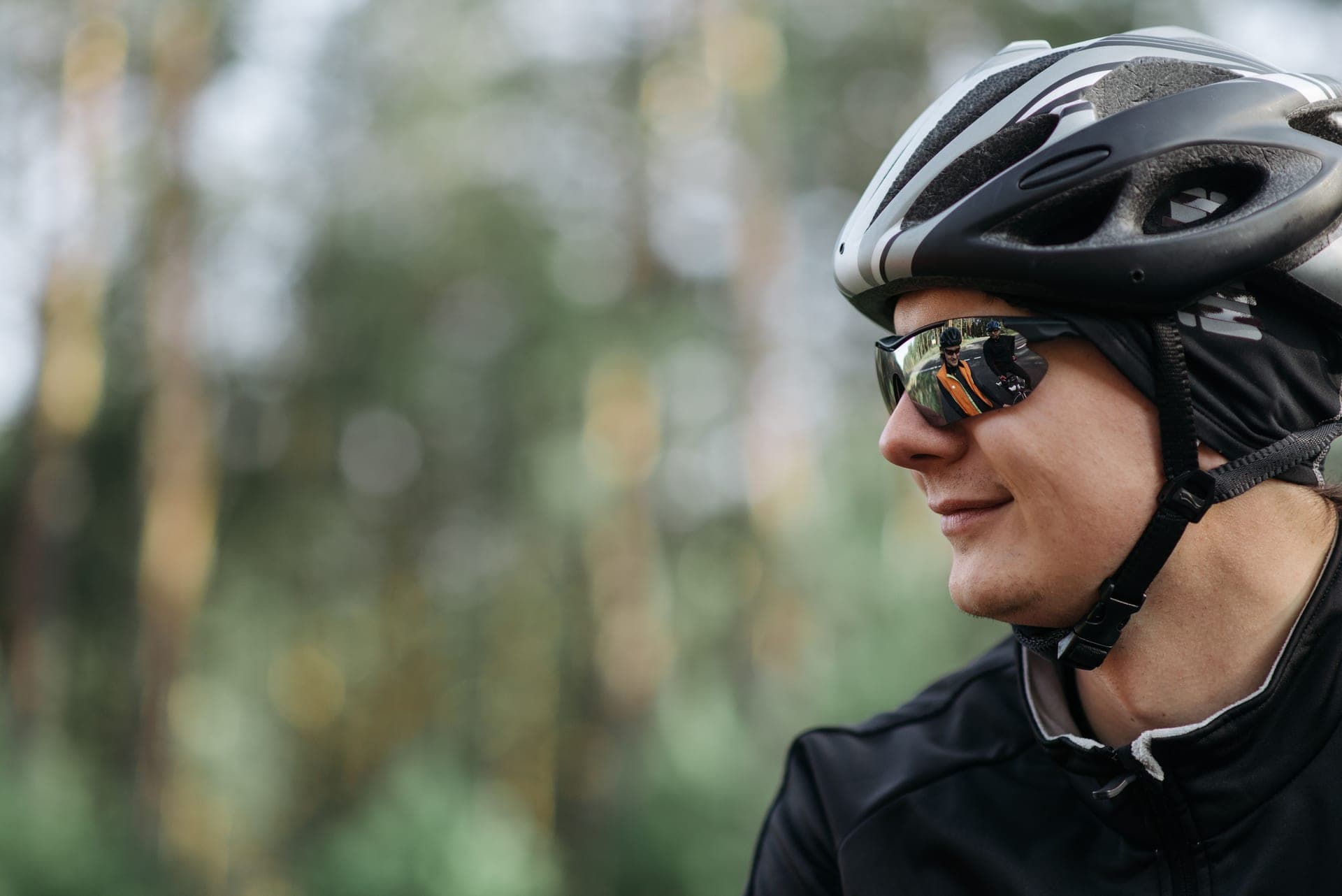
Sunglasses are impact-tested. Just not for this.
The usual answer to this question — "sunglasses aren't safety glasses" — is true but lazy, and it loses the reader who is holding a $200 pair and can feel how solid they are. So here is the specific version. Sunglasses sold in the United States are not untested. Federal rule 21 CFR 801.410 requires that eyeglasses and sunglasses be fitted with impact-resistant lenses, and it spells out the test: "a 5/8-inch steel ball weighing approximately 0.56 ounce is dropped from a height of 50 inches upon the horizontal upper surface of the lens." A manufacturer may substitute "any equal or superior test."
That is a real requirement and it is why modern sunglass lenses do not turn to powder in a gym bag. It is also a gravity test. A 50-inch free fall is over in about a third of a second and arrives at roughly 11 mph — that figure is arithmetic on the drop height in the rule, not a number the rule prints. Nothing on a shooting range travels at 11 mph. Ejected brass, a clay chip, a pellet skipping off a steel plate and the fragment of a primer all arrive an order of magnitude faster, which is exactly the hazard the occupational standard was written around.
The gap, in numbers
Put the tests side by side and the question answers itself. The sunglass rule and the nonprescription sunglass standard both hinge on a ball falling onto a lens; ANSI/ISEA Z87.1 fires a projectile at eyewear that has been assembled and mounted, and the impact-rated tier — the plus — adds a weight thirty times heavier than the sunglass ball.
| Test | What hits the lens | How fast | What is being tested |
|---|---|---|---|
| FDA 21 CFR 801.410 (all US sunglasses) | 5/8 in steel ball, approx. 0.56 oz | Dropped from 50 in — a free fall | The lens, on its own |
| ANSI Z80.3 (nonprescription sunglasses) | The same drop-ball | The same 50 in fall | The lens resting on a tube |
| ANSI Z87.1 high mass (Z87+) | 500 g pointed weight | Dropped from about 4 ft | Frame and lens assembled on a head form |
| ANSI Z87.1 high velocity (Z87+) | 1/4 in steel ball | About 150 ft/s — 102 mph | Frame and lens, struck at 20 points |
| MIL-PRF-32432 | T37-shaped fragment simulator | Several times the ANSI energy | The complete eyewear |
The pointed 500 g weight in the high-mass test is roughly thirty times the mass of the sunglass drop-ball, and the high-velocity ball — lighter than the drop-ball, much faster — is the one that decides whether a lens earns the plus. The full walk through both ANSI tiers is on Z87 vs Z87+, and the ballistic tier above them on ANSI Z87.1 vs MIL-PRF-32432.
The half nobody tests: the frame
The difference that matters most is not the projectile. It is what is being held when the projectile arrives. In the sunglass drop-ball procedure the lens is tested by itself, resting on a tube; in Z87.1 the lens has to be in the frame, the frame has to be on a head form, and both have to survive — the lens must not crack, and it must not leave the frame and reach the eye behind it.
This is why a premium sunglass can have a genuinely tough lens and still be the wrong thing to wear at a firing line. A fashion frame is designed to release a lens under load, because a lens that pops out is a cheap repair and a lens that stays in can tear a frame. On a range that release is the failure. The American Academy of Ophthalmology puts the everyday version of this bluntly: "Regular eyeglasses do not offer proper eye protection and, in some cases, can make an injury worse if they shatter."
Coverage is the second half. A sunglass is shaped to flatter a face; a rated shooting frame is shaped to close the gap above the brow and beside the temple, because brass comes from above and beside. That fit argument, with the head-tilt check you can run in a store, is on shooting glasses vs safety glasses.
Are Oakley sunglasses good for shooting?
This is the version of the question people actually type, and it deserves a precise answer rather than a brand verdict. Oakley sells two different things. The standard catalog — the sunglasses sold in a mall store — is eyewear built to the sunglass rules above. The Standard Issue line is separate, and the SI Ballistic M Frame 3.0 is listed by retailers with ANSI Z87.1, MIL-PRF-32432 and Plutonite lenses, with Thin Stem temples described for use under over-ear hearing protection and comms.
We cite a retailer for that because Oakley's own product pages block automated readers, and this site does not print a rating it could not read on a page it can link to. That is also the honest limit of the answer: "are all Oakley lenses ballistic?" is a question only Oakley can answer for a given model, and the only safe reading of a page that does not name a standard is that the standard is not claimed. Applied to any brand, the rule is the same one on how to tell if glasses are ballistic rated: find the document number, or assume it is not there.
When your sunglasses are genuinely fine
Two honest exceptions, because pretending there are none costs the rest of the page its credibility.
Your sunglasses may already be rated. Several sport and tactical brands sell frames that look like ordinary sunglasses and state Z87.1+ or MIL-PRF-32432 on the product page — the two picks below are exactly that. Check the temple for a Z87 mark and check the page for the standard. If it is there, you own range eyewear that happens to be handsome.
Outdoors, eye-level, behind the line. A spectator standing well back on an outdoor range in the sun is not the person this page is written for. The risk rises sharply with an indoor bay and hard walls, steel targets, air guns and airsoft, or a child on the line — for BB and pellet guns the American Academy of Ophthalmology recommends ballistic protection outright, which is covered on BB gun and air gun eye injuries. And if the reason you reach for sunglasses is glare, read should shooting glasses be polarized first: the polarizing filter that helps on water can dim a red dot and mottle an LCD.
Rated sunglasses that look like sunglasses
The fix for this problem is not a pair of shop goggles. It is a sunglass whose maker publishes a standard. Both of these ship with a gray or smoke lens, wear like eyewear rather than equipment, and state a ballistic rating on a page you can read.
Our picks for this
Two sunglasses with a rating on the page
Both are smoke-lens frames for bright light, so pair either with a clear lens for an indoor bay.
 Stock photo
Best for large heads
Wiley X WX Gravity
MIL-PRF-32432A7.6/10MIL-PRF-32432A and Z87.1+ stated by Wiley X, smoke gray lens, removable gasket and T-docking strap, medium and large sizes.
Check price · Amazon#ad · Price set by Amazon · Disclosure for the link to Wiley X WX Gravity
- Stock photo
Best for medium-to-large faces
Magpul Defiant
MIL-PRF-32432 (tested to)8.1/10Z87+ and "tested to" MIL-PRF-32432 per the NRA launch coverage, with temples designed around over-the-ear hearing protection.
Check price · Amazon#ad · Price set by Amazon · Disclosure for the link to Magpul Defiant
Neither ships a clear lens, which is the one real cost of buying a sunglass rather than a kit: after dusk or inside, a smoke lens is a liability. If you want one frame for both, a changeable-lens kit from the ranked roundup covers bright and indoor light in the same case.
How Lens & Lead rates eyewear
Pairs we claim to have worn or tested: 0
Plenty of sites say they shot every pair on the list. We didn't, and we say so. What we do instead: read the certification the maker actually publishes and repeat its wording ("meets", "certified", "tested to", "APEL"), check the lens system and the tints in the box, note whether the temples are described for ear muffs and whether an Rx route exists, and score every pick on a public rubric that weights protection first. Every figure links to where it came from; where the maker's page would not load we cite the retailer and say so. The standards themselves are explained on ANSI Z87.1 vs MIL-PRF-32432.
Scores are editorial judgments from that documented research, not test results. Commissions never set a score or decide a pick. The rubric and its weights are published.
Questions
Frequently asked
Are sunglasses good for shooting?
Only if the maker states ANSI Z87.1+ or a MIL-PRF standard. Ordinary sunglasses meet the FDA drop-ball test — a 5/8-inch ball dropped 50 inches onto the lens — which is far below the quarter-inch steel ball at about 102 mph that Z87+ eyewear takes in an assembled frame.
Are Oakley sunglasses good for shooting?
Oakley's Standard Issue ballistic line is a different product from the mall-store catalog. Retailer listings for the SI Ballistic M Frame 3.0 state ANSI Z87.1 and MIL-PRF-32432; a standard Oakley sunglass page that names no standard is not claiming one. Check the specific model.
Are prescription glasses safe for shooting?
Not by default — everyday Rx lenses are made to the same impact-resistance rule as sunglasses, and the frame is not tested with the lens in it. Prescription safety frames are marked Z87-2. The routes are on the prescription guide.
Do my sunglasses have to say Z87 to be legal at a range?
Range rules vary and most simply require eye protection, so an unrated sunglass often passes the door check. That is a policy question, not a protection one; the range's minimum is not the same as the standard that was written for projectiles.
Keep reading
Related on Lens & Lead
- Z87 vs Z87+The tier a sunglass has to reach.
- Shooting glasses vs safety glassesSame standard, different job.
- How to tell if glasses are ballistic ratedThe five-step check.
- Should shooting glasses be polarized?If glare is why you reach for sunglasses.
- Best shooting glassesRanked pairs that state a rating.
Receipts
Sources
- Cornell Legal Information Institute — 21 CFR 801.410, Use of impact-resistant lenses in eyeglasses and sunglasses ("a 5/8-inch steel ball weighing approximately 0.56 ounce is dropped from a height of 50 inches upon the horizontal upper surface of the lens") (checked 2026-09-24)
- Revant Optics (lens maker explainer) — Sunglasses impact resistance: the ANSI Z80.3 drop-ball test is run on the lens alone on a tube, while ANSI Z87.1 tests the assembled frame and lens on a head form (checked 2026-09-24)
- MSC Industrial Supply — Understanding ANSI Z87.1 (high-mass 500 g from 4 ft; high-velocity steel ball at 102 mph; Z87+ and U/L/W/H/D/X markings) (checked 2026-09-21)
- American Academy of Ophthalmology — Sports Eye Safety ("Regular eyeglasses do not offer proper eye protection and, in some cases, can make an injury worse if they shatter"; polycarbonate protective sports glasses) (checked 2026-09-24)
- American Academy of Ophthalmology — Combating Eye Injuries from Air Guns (checked 2026-09-21)
- ISEA — ISEA publishes ANSI/ISEA Z87.1-2020 eye and face protection standard update (anti-fog criteria, relaxed optics, marking) (checked 2026-09-21)
- Wiley X — WX Gravity product page (ratings, sizes, gasket, Rx) (checked 2026-09-21)
- Shooting Sports USA (NRA) — New: Magpul Defiant Eyewear (Z87+, tested to MIL-PRF-32432, TR90NZZ, temple design, coatings) (checked 2026-09-21)
- Shellback Tactical — Oakley SI Ballistic M Frame 3.0 listing (ANSI Z87.1, MIL-PRF-32432, Thin Stem, Plutonite, UV) (checked 2026-09-21)
- Wikipedia — Ballistic eyewear (MIL-PRF-31013 0.15 cal T37 at 640–660 ft/s for spectacles; 0.22 cal at 550–560 ft/s for goggles; Z87 vs Z87+ marking) (checked 2026-09-21)
We don't own or wear-test these glasses and we don't pretend to. Ratings, lens systems, fit notes and coatings come from the maker's own product pages (linked on every product) or, where the maker's page would not load, from a retailer or press page we label as such. Where a figure isn't published we say so. Prices are set by Amazon and change often, so we don't print them. Read the full method.